Film folk took to social media to share adorable pictures and messages for her daddies on #HappyFathersDay.

'We don't make films for profit and that's exactly why profit follows.'
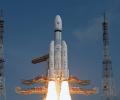
The test vehicle development flight (TV-D1) will be conducted at the Satish Dhawan Space Centre in Sriharikota in Andhra Pradesh to test the crew module that is scheduled to house Indian astronauts during the human spaceflight late next year.

After the haldi and mehendi ceremonies, Anurag Kashyap's daughter Aaliyah Kashyap and Shane Gregoire threw a pre-wedding party, and invited their friends over.
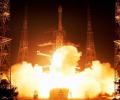
ISRO is part of an exclusive league which has forayed into the Moon and Sun.

'When a Project Director is appointed, the whole organization -- including the Chairman ISRO -- works for his success. It is a lesson that has been of abiding value all through the other projects I have worked on,' recalls the late President, one of the earliest pioneers at ISRO.
If it becomes a reality, the Chennai-based company will become the first private player from India to conduct such a mission to the lunar surface.

The Roshans and their friends celebrated the success of the Netflix docu-series with a grand party over the weekend.

Simran Bhatia will soon be making her Bollywood debut with Agastya Nanda!

Manushi is Little Miss Sunshine.. Shraddha has a question for you... Kareena goes glam...

Film folk continue to dazzle at Diwali parties this season.

Sara visits a temple... Taapsee plays hide and seek... Malaika basks in the sun...

Banita Sandhu attended the Screen Actors Guild Awards on Sunday, February 23, at the Shrine auditorium in Los Angeles.

The launch of Polar Satellite Launch Vehicle (PSLV-C52) is scheduled at 05:59 hours on Monday from the First Launch Pad of Satish Dhawan Space Centre, Sriharikota, the Bengaluru-headquartered space agency said.

Alaya is a 'brat'... Plabita needs some sunshine... Vijay gets the blues...

Around 23 minutes after lift-off, the primary satellite got separated and it was followed by six other co-passenger satellites, which were deployed into the intended orbits sequentially, ISRO said.
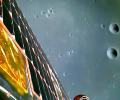
Taking to X (formerly Twitter), ISRO said, "Chandrayaan-3 Mission. Chandrayaan-3 Rover to MOX, ISTRAC, Moon walk begins!"

Disha gets glamorous... Sunny is a Punjabi kudi... Trisha holidays in Japan...

Just who are the reining stars of Bollywood? One look at Maddock Films' 20th anniversary party gives you a pretty good idea.

Scientists are working on conducting various tests for the ambitious Gaganyaan mission and the agency is coordinating with the Navy and others in this connection, he said.

Samantha and Varun Dhawan got together to party and celebrate the success of their Web show, Citadel: Honey Bunny held in Mumbai.

Once Aditya L1 reaches its destination, it will help measure various events happening on the Sun for the next five years.

'People ask me about my biggest action sequence; this is it, because it involved two giants of Indian cinema.'

Film folk are busy making memories on Diwali with families, and they share some with us.

'Day by day we expose how soulless we have become as a society. Every day is a disappointment.'

Four years after it broke many hearts, Indian Space Research Organisation's Chandrayaan is all set to soar towards the moon in its third expedition on Friday in an attempt to put the country in an elite club of nations that accomplished lunar missions with a soft landing.

Neha watches her first Test in person... Fatima takes a mielfie... Sonal in Dubai...

Skyroot Aerospace has become the first private company in India to give wings to the Indian space programme, after the sector was opened to private players by the Centre in 2020.
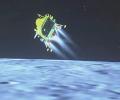
Despite the chill in bilateral ties, Pakistan's media on Thursday gave front-page coverage to India's historic moon landing while a former minister even called it a 'great moment' for Indian Space Research Organisation.

'Your vibrancy, your grace, your diversity, and the stories embedded in your soil -- forever in love and awe of you, my beautiful India.'

The space agency had earlier announced that the launch is tentatively scheduled at 09:28 hrs IST on November 25, subject to weather conditions.

ISRO aims to send humans into space on a Low Earth Orbit of 400 km for a three-day mission and bring them safely back to earth.

Durga pujo celebrations continue, and this time, Alia Bhatt joins the Mukherjees at the the North Bombay Sarbojanin Durga Puja pandal.
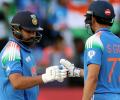
Rohit Sharma's aggressive batting and Shubman Gill's calculated approach have formed a formidable opening partnership for India in ODIs.
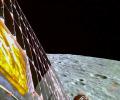
According to the Indian Situational Space Awareness Report for 2023, the nominal lift-off of the Launch Vehicle Mark-3, carrying the Chandrayaan-3 spacecraft, had to be delayed by four seconds based on the Collision on Launch Avoidance analysis.

National Aeronautics and Space Administration will soon provide advanced training to Indian astronauts, with the goal of mounting a joint effort to the International Space Station, a top American diplomat said Friday.
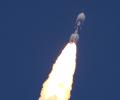
India's first solar mission, if successful, will showcase ISRO's ability to explore the cosmos, explains Kumar Abishek.

The ISRO on Sunday scripted yet another history after its LVM3 rocket successfully placed 36 satellites of United Kingdom-based OneWeb group company into intended orbits.

Bollywood celebrated Mother's Day with beautiful pictures of their mums on social media.

Varun-Natasha's anniversary... Soha goes to Japan... meet the lady who has Bobby's heart...
